


New medical pathway CTE program providing future for current seniors
Montgomery ISD continues to expand the Career and Technical Education opportunities for students with additional course selections and certifications being offered each year. For the 2023-2024 school year, the Practicum in Health Science EMT class was added to the course catalog and fourteen students have been participating, with plans to graduate high school as certified EMTs, ready to serve their community through their career.
Practicum in Health Science EMT is taught at Montgomery HS by Wade Johnson, paramedic turned teacher, who shares both his personal and professional experience with his students, helping make this pathway a reality for their future. Johnson became an EMT at the age of 18 and a paramedic in 2001, serving for over a decade as a field training officer. This is his second year teaching in Montgomery ISD.
“When I learned that health science classes were going to be offered in high schools to prepare students for a future as an EMT, I was immediately interested in continuing my career as a teacher,” said Johson. “The beauty of teaching in a CTE program is that the kids want to be here, they chose to be learning this material and we get immediate engagement from them when the class begins. The students are what make the program.”
The students, all with a variety of backgrounds and varying reasons for pursuing the medical pathway, come together through this practicum class and build a foundation for their future in medicine. Though several students plan to start working immediately following graduation, some plan to go directly to paramedic school and others will continue their education at four-year colleges, pursuing degrees in nursing, biology, pre-med and pre-vet. Most college bound students in the EMT program plan to use their EMT certification to work their way through school, lowering their accumulation of college debt and supporting themselves through school.
“I’ve enjoyed the classes and know that I’ve learned so much,” said Skyler Brannon, a senior that plans to work immediately following graduation. “I’d like to start just using what I’ve learned and make sure I like the job first, before I spend money or time on more education. I plan to be a paramedic eventually, but making money and being able to help people, without going to college for four or eight years, is definitely my priority. No matter what, I will always have these skills.”
All students in the practicum-level class are seniors, finishing a pathway that began with Principles of Health Science and included medical terminology and medical theory, as well as anatomy and physiology and pathology courses that were prerequisites to the practicum.
“I took this pathway in high school to put me ahead in what I want to do with my future,” said Camari Adams. “I plan to go to college and will work as an EMT to support myself through school. Being an obstetrician has been a dream of mine since I was a little girl, and learning all the skills through this program has gotten me even more excited about my future plans. Babies are a blessing and I want to be a part of bringing that joy into the world!”
Students in this practicum level class are required to earn 72 hours of skills training with an EMS crew and 40 hours in an emergency room. Because the shifts held in these careers range between eight and twelve hours, these students are required to get these hours outside of the school day, often on weekends and school holidays. Many of these students also have jobs of their own and some even participate in extracurricular activities including track, band and basketball.
“It takes a lot of dedication,” said Johnson. “This first class has been very impressive, learning time management and balancing their work and school and social life. It’s just a blessing to teach such motivated students.”
Students will complete the required hours and continue the coursework until April, when they will take the national registry exam. Once they have their registry results in April and their high school diploma in May, they will apply to the state and be certified EMTs in the state of Texas. In addition to the certification, these graduates will also have the CPR certification, the required FEMA incident command classes, and will be able to go to work immediately for transfer and 911 services.
“The students that plan to go into nursing or medical pathways will already be a year ahead in their training,” said Johnson. “They have developed soft skills training in doing patient interviews and bedside manner and empathy toward patients that you cannot get just sitting in a classroom.”

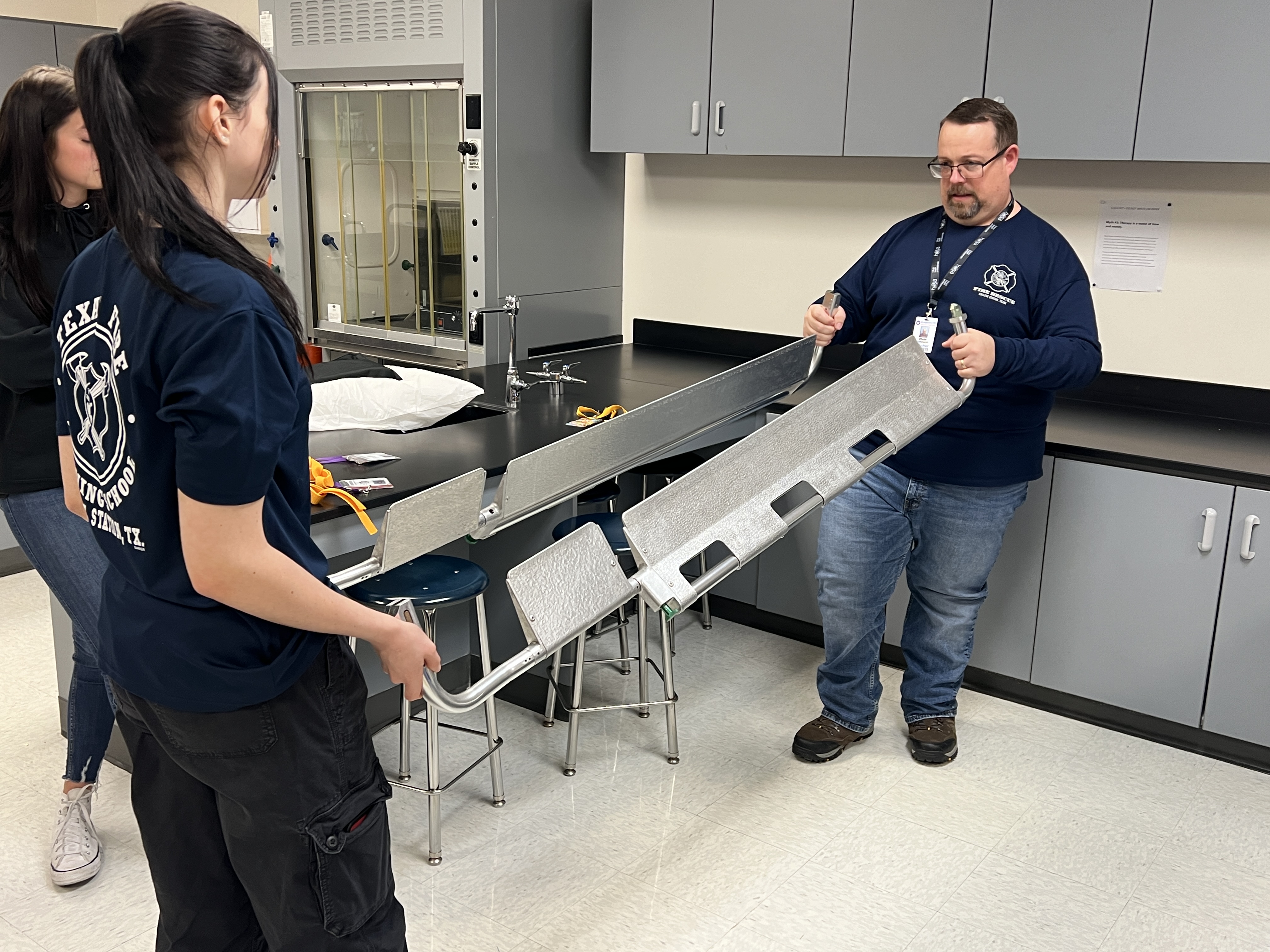
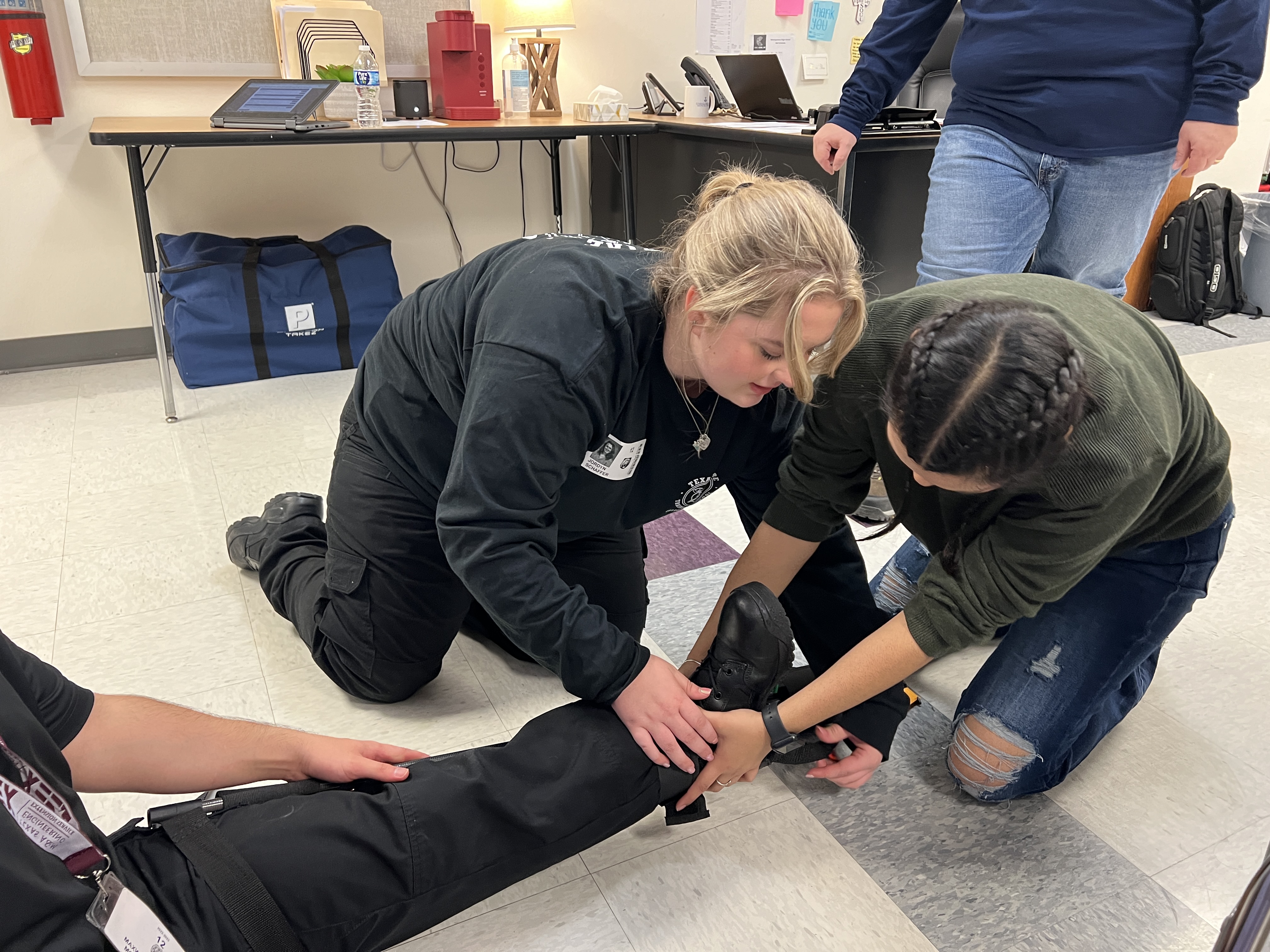
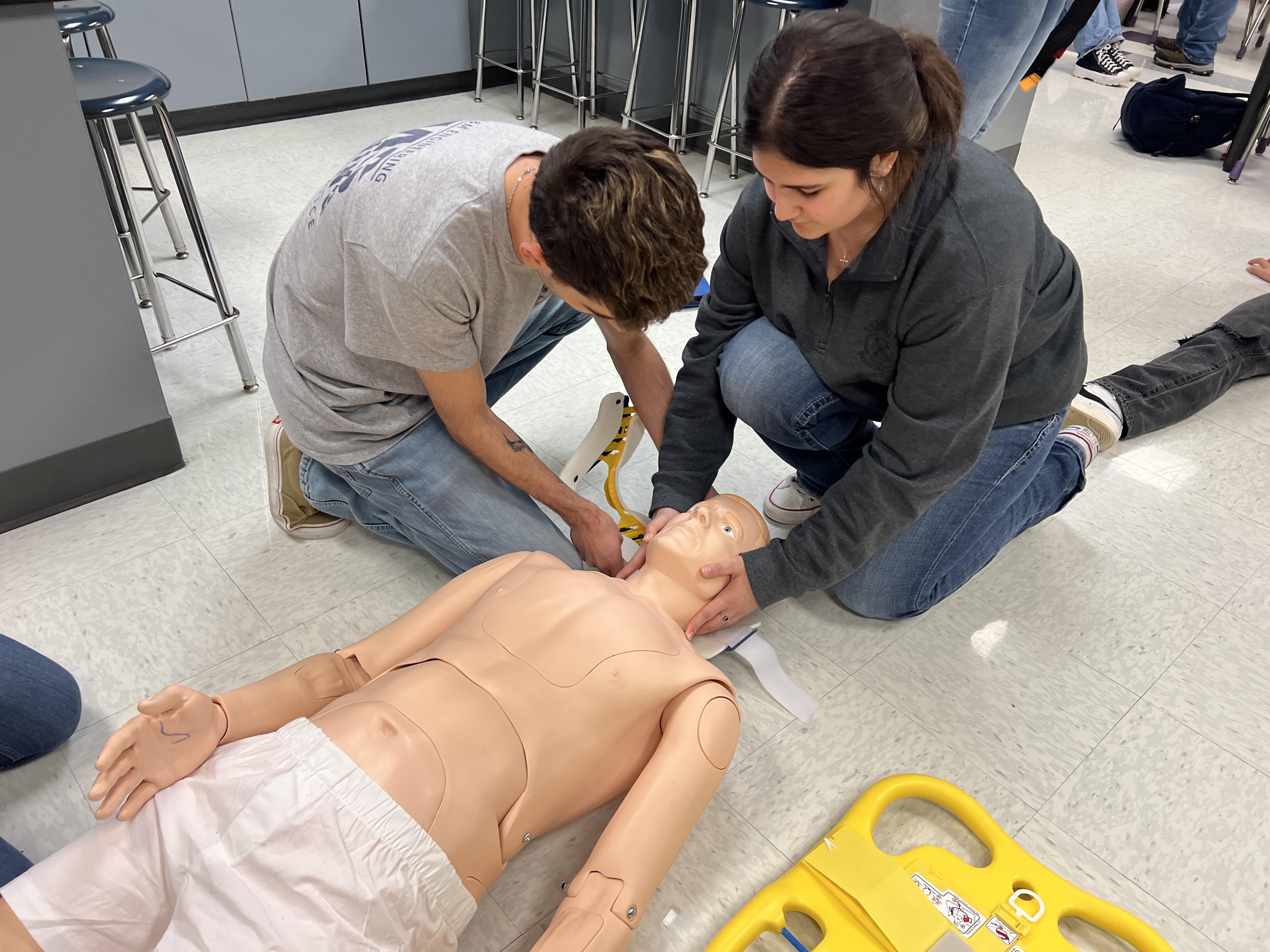

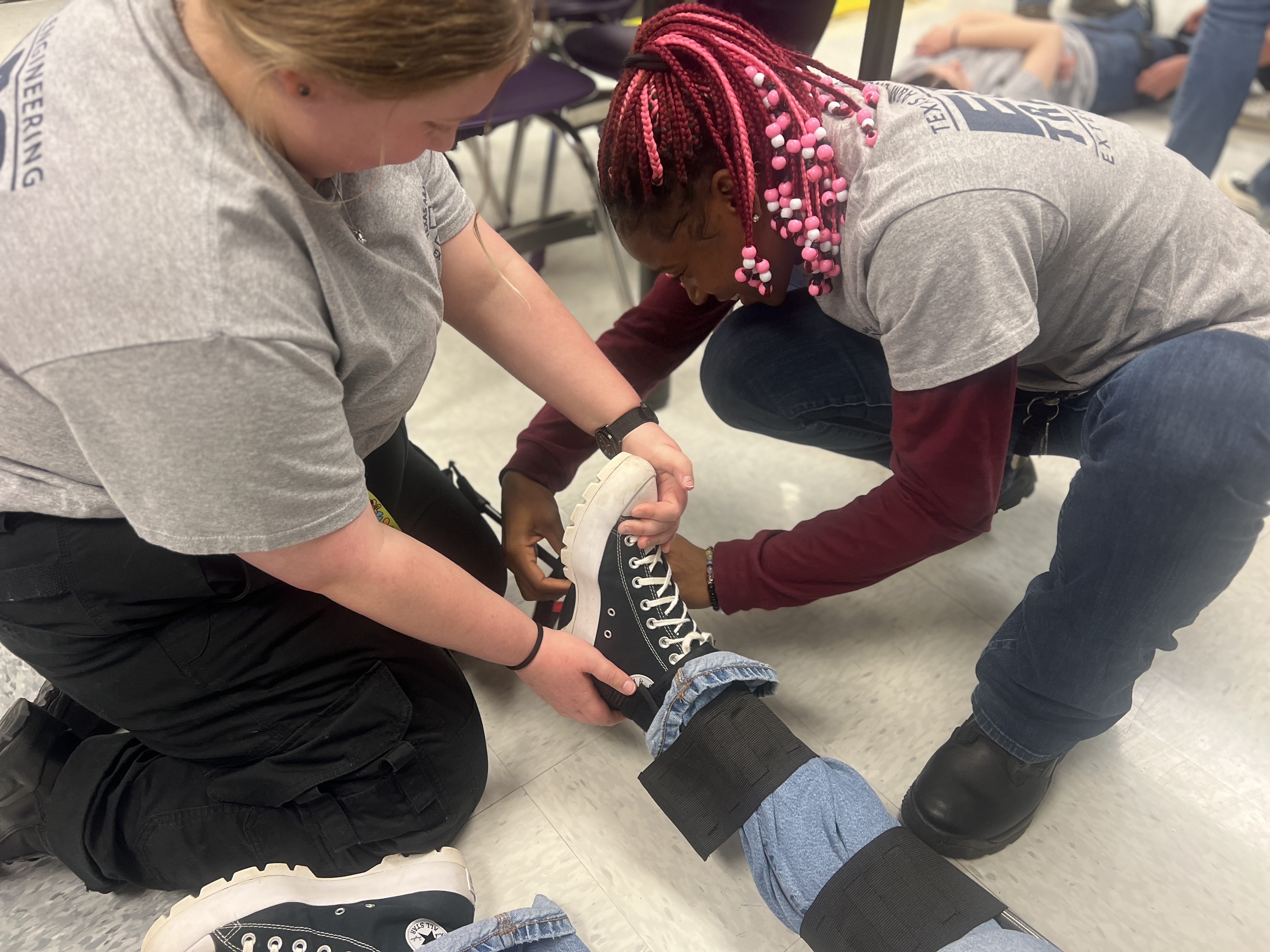

“We have learned so many skills,” said Jewel Dooley, “and for a fraction of the cost that would be required if we were to do this out of school, on our own. This is such an opportunity to have this preparation into becoming an adult and knowing that you are prepared and can provide for yourself with the skills you’ve been given.”
When the class was asked to share the specific skills they’ve learned, students spoke about skills needed to respond to patients, documenting care, the physical role of following safety procedures and protocols, as well as teamwork and communication skills. Students shared that the experience in clinicals was irreplaceable, helping them quickly understand why they have been taught the things they have since their freshman year.
Taking this course in Montgomery ISD costs students $250, for a program that would privately cost upwards of $3000 outside of school. Private programs are shorter, sometimes just seven weeks to learn the material that MISD students learn over the course of their senior year. This provides more time to get training, develop skills and be offered reteaching and hands-on training before they take the certification test.
In response to Montgomery ISD’s overwhelming support of Career and Technical Education, this Practicum in Health Science EMT class will be offered at MISD CTE Center starting the August 2025, where the facility will be equipped with a mock ambulance. This will allow students to practice their skills in a lifelike setting, with cameras inside the setup that will allow teachers to model from inside the ambulance during instruction time.
“Like I said, it’s an opportunity,” said Dooley. “An opportunity that was only available to me because of the teachers and programs here in our school.”

 The MISD Premier Blog